
A company’s growth often depends on finding new customers, understanding market opportunities, and building strong professional relationships. This is where a Business Development Representative plays an important role. These professionals help businesses identify potential customers, introduce products or services, and create opportunities for future sales.
In the United States, business development is an important function across industries such as technology, software, consulting, financial services, and professional services. Companies rely on skilled representatives to connect with potential clients and support their sales teams.
However, becoming successful in this profession requires more than making phone calls or sending emails. It involves communication, research, customer understanding, organization, and the ability to recognize valuable business opportunities.
What Is a Business Development Representative?
A Business Development Representative (BDR) is a sales professional responsible for identifying potential customers and generating new business opportunities. Their primary responsibility is to connect with prospects who may benefit from a company’s products or services.
BDRs generally concentrate on the early stages of the sales process. They research potential customers, initiate conversations, qualify leads, and arrange meetings with appropriate sales professionals.
Understanding the Role of a Business Development Representative
The Business Development Representative role combines prospect research, communication, and sales development. Representatives identify suitable businesses, understand their requirements, and introduce relevant company offerings.
They also collect information about potential customers to help the sales team determine which opportunities deserve further attention.
Why Business Development Representatives Are Important
Business Development Representatives help companies maintain a consistent process for finding and developing potential customers.
Their work supports business growth in several ways:
- Identifying new markets and potential clients.
- Creating qualified sales opportunities.
- Helping sales teams prioritize interested prospects.
- Building relationships with business decision-makers.
- Supporting customer acquisition and revenue objectives.
Their contribution is particularly valuable in business-to-business (B2B) organizations, where purchasing decisions often involve several conversations and decision-makers.
BDR vs. SDR: Understanding the Key Differences
Business Development Representatives (BDRs) and Sales Development Representatives (SDRs) perform similar responsibilities, but their roles may differ depending on the company.
Traditionally, BDRs often concentrate on outbound prospecting, while SDRs frequently handle inbound inquiries and qualify marketing-generated leads. However, some employers use these job titles interchangeably.
What Are the Main Roles and Responsibilities of a Business Development Representative?
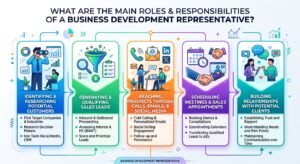
A Business Development Representative performs several activities to identify prospects, create business opportunities, and support the sales process. Although daily responsibilities vary, most positions involve research, lead generation, outreach, and customer communication.
Identifying and Researching Potential Customers
Researching potential customers is one of the first responsibilities of a Business Development Representative. Representatives examine businesses, industries, company websites, and professional profiles to identify suitable prospects.
Generating and Qualifying Sales Leads
Lead generation involves finding individuals or organizations that may become customers. Lead qualification helps determine whether those prospects are suitable for the company’s products or services.
Representatives may consider a prospect’s business requirements, purchasing authority, budget, interest, and expected buying timeline.
A qualified lead is not necessarily a confirmed customer. It simply represents a potential opportunity that deserves further attention.
Reaching Prospects Through Calls, Emails, and Social Media
Representatives use telephone calls, professional emails, and networking platforms to introduce their companies and start conversations.
LinkedIn can help identify business professionals and decision-makers, while email and telephone communication provide opportunities to explain relevant services.
Effective outreach should be personalized, accurate, and respectful rather than relying on repetitive promotional messages.
Scheduling Meetings and Sales Appointments
When a prospect demonstrates genuine interest, the representative may schedule a meeting with an account executive or another sales professional.
This meeting allows the company to understand the customer’s requirements and discuss possible solutions.
The BDR may coordinate schedules, send meeting invitations, and share important information collected during previous conversations.
Building Relationships With Potential Clients
Not every prospect is ready to purchase immediately. Some businesses need additional information or time to evaluate their options.
A Business Development Representative maintains professional communication through appropriate follow-ups, useful information, and clear responses to questions.
Building trust and understanding customer needs can help create opportunities for future business.
Essential Skills Required to Become a Business Development Representative
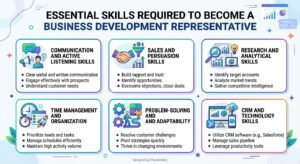
A successful Business Development Representative needs communication, research, organization, and sales-related skills. These abilities help professionals manage prospects and create meaningful business conversations.
Communication and Active Listening Skills
Clear communication helps representatives explain products and services professionally. Active listening is equally important because it allows them to understand customer concerns and identify relevant requirements.
Instead of immediately promoting a product, representatives should ask questions and pay attention to the answers.
Sales and Persuasion Skills
Sales skills help representatives explain how a company’s offering may solve a particular business problem.
Persuasion should focus on communicating genuine value rather than pressuring customers. Understanding product benefits and responding professionally to objections are important parts of this process.
Research and Analytical Skills
Research skills help representatives identify suitable prospects and understand their industries.
Analytical abilities allow them to review information, recognize potential opportunities, and evaluate outreach performance. These skills can improve prospect selection and make sales activities more productive.
Time Management and Organization
BDRs often manage several prospects and follow-up activities simultaneously. Good organization helps them maintain accurate records and prioritize important conversations.
Creating daily schedules, setting reminders, and updating CRM information can make their work more efficient.
Problem-Solving and Adaptability
Every customer has different expectations and business challenges. Representatives must understand these differences and adjust their communication accordingly.
Adaptability also helps professionals respond to changing market conditions, customer preferences, and company sales strategies.
CRM and Technology Skills
Customer Relationship Management (CRM) platforms help representatives organize prospect information and monitor sales activities.
Popular examples include Salesforce, HubSpot, and Microsoft Dynamics 365. Basic knowledge of spreadsheets, email applications, and professional networking platforms is also useful.
How to Become a Business Development Representative
Starting a career as a Business Development Representative does not always require extensive professional experience. Many employers consider candidates with strong communication abilities, relevant knowledge, and a willingness to learn.
Educational Background and Qualifications
Educational requirements depend on the employer and industry. Some companies prefer a bachelor’s degree in business administration, marketing, communications, or a related subject.
However, a degree is not a universal requirement for every entry-level BDR position. Some employers consider candidates with a high school diploma or equivalent qualification and relevant practical skills.
Developing Essential Sales Skills
Learning basic sales techniques can help candidates prepare for the profession. Important areas include prospect research, lead qualification, professional communication, customer relationship management, and handling objections.
Practicing introductory sales conversations and learning CRM software can also improve job readiness.
Gaining Practical Experience
Internships, customer service positions, retail sales, and sales assistant roles can help candidates develop transferable skills. These abilities are useful when applying for business development opportunities.
Creating a Professional Resume and LinkedIn Profile
A professional resume should highlight communication skills, customer service experience, sales knowledge, education, and relevant technical abilities.
A complete LinkedIn profile can also help candidates connect with recruiters and discover American job opportunities. Use accurate employment information and provide practical examples of your achievements whenever possible.
Preparing for BDR Job Interviews
Employers may ask candidates about prospecting, communication, handling rejection, and meeting performance targets.
Prepare answers to questions such as:
- Why do you want to become a BDR?
- How would you approach a new prospect?
- How do you handle rejection?
- How would you qualify a potential customer?
Providing clear examples can demonstrate your understanding of the position.
Tools and Technologies Used by Business Development Representatives
Modern sales teams use technology to organize customer information, research prospects, and manage communication. Understanding these tools can help representatives work more efficiently.
Customer Relationship Management (CRM) Software
CRM platforms store customer details, communication history, lead information, and follow-up activities. Salesforce, HubSpot, and Microsoft Dynamics 365 are examples of platforms used by sales organizations.
Lead Generation and Prospecting Tools
Prospecting tools help representatives identify businesses, industries, and relevant decision-makers.
LinkedIn and business research platforms can support prospect discovery and professional networking. Representatives should always verify information and use contact data responsibly.
Email Outreach and Automation Platforms
Email platforms help representatives organize professional communication, schedule follow-ups, and manage outreach activities. Automation can reduce repetitive work, but personalized communication remains important.
In the United States, commercial email must comply with applicable CAN-SPAM requirements, including accurate sender information and a working opt-out process.
Sales Tracking and Performance Tools
Sales tracking tools help representatives monitor calls, emails, responses, qualified leads, and scheduled meetings. Reviewing these measurements can help identify weaknesses in outreach strategies and improve performance.
Business Development Representative Salary and Benefits
Salary is an important consideration for anyone exploring a Business Development Representative career in the United States. Compensation varies according to location, industry, experience, employer, and performance.
Average Salary Expectations
According to Built In’s U.S. salary reporting, the average base salary for a Business Development Representative is approximately $59,294, with reported additional cash compensation averaging $32,511. The reported average total compensation is approximately $91,805.
These are employee-reported estimates, not guaranteed earnings. Actual compensation may be lower or higher depending on the employer and incentive structure.
Candidates should also remember that base salary and total compensation are different. Commission and bonuses may depend on achieving specific performance targets.
Factors That Influence BDR Salaries
Several factors affect compensation:
- Experience: Previous sales experience may improve earning opportunities.
- Location: Salaries can differ between U.S. cities and states.
- Industry: Technology and specialized business services may have different compensation structures.
- Company size: Employers offer different salary and incentive packages.
- Performance: Some companies provide additional compensation for meeting agreed targets.
Commission, Bonuses, and Additional Benefits
Some employers offer commissions or performance bonuses alongside base salaries. Additional benefits may include health insurance, retirement plans, paid leave, professional training, and remote or hybrid work arrangements.
Candidates should review the written employment offer carefully to understand the base salary, bonus conditions, commission structure, and available benefits.
Career Opportunities and Growth for Business Development Representatives
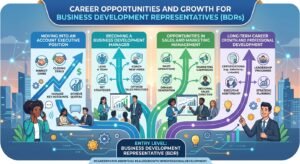
Business development experience can create opportunities in sales, account management, and business leadership.
Career progression depends on professional performance, experience, available positions, and the employer’s organizational structure.
Moving Into an Account Executive Position
An Account Executive position is a possible career step for experienced BDRs.
Account Executives generally manage more advanced sales activities, including product demonstrations, customer meetings, proposals, negotiations, and closing agreements.
This transition allows professionals to develop broader sales experience and take responsibility for managing customer opportunities.
Becoming a Business Development Manager
Business Development Managers focus on identifying growth opportunities, developing partnerships, maintaining important business relationships, and supporting commercial strategies.
This position generally requires stronger industry knowledge, strategic thinking, and professional experience.
Opportunities in Sales and Marketing Management
Experienced representatives may explore related positions such as Sales Manager, Sales Development Manager, Account Management Manager, or Sales Operations Manager.
These roles involve greater responsibility for sales performance, team coordination, customer relationships, or business operations.
Long-Term Career Growth and Professional Development
Long-term success requires continuous learning and professional development. Representatives can improve their career prospects by developing negotiation, leadership, communication, sales forecasting, and market research skills.
Practical experience and consistent performance can help prepare professionals for more advanced responsibilities.
Common Challenges Faced by Business Development Representatives
Although the profession offers career opportunities, it also involves challenges that require patience, consistency, and professional discipline.
Handling Customer Rejection
Some prospects will decline meetings or show no interest in a company’s offering. Representatives should treat rejection professionally and learn from conversations rather than taking every negative response personally.
Meeting Sales and Lead Generation Targets
Many employers establish targets for outreach activities, qualified leads, or scheduled meetings. Representatives need to balance productivity with the quality of their customer interactions.
Managing Multiple Prospects and Follow-Ups
Managing different prospects can become difficult without an organized system. CRM software, reminders, and clear follow-up schedules help representatives maintain accurate records and avoid missing important conversations.
Maintaining Motivation and Productivity
Repeated outreach and performance expectations can sometimes affect motivation. Setting realistic goals, reviewing progress, learning from colleagues, and maintaining a consistent routine can help representatives remain productive.
Read more: Website TheBoringMagazine Explained: Features, Content, and Purpose
Tips for Becoming a Successful Business Development Representative
Developing effective professional habits can help representatives improve their performance and build stronger customer relationships.
Research Potential Customers Before Contacting Them
Understand the prospect’s business, industry, and possible requirements before starting a conversation. Relevant research makes outreach more meaningful.
Personalize Your Sales Communication
Avoid sending identical messages to every prospect. Explain why you are contacting the individual and how your company’s offering may address a relevant business need.
Focus on Customer Needs and Relationships
Listen carefully, ask appropriate questions, and understand the customer’s priorities. Building relationships should be more important than pressuring someone into a quick decision.
Track Performance and Improve Sales Strategies
Review outreach results, monitor qualified opportunities, and identify areas that need improvement. Use performance information to make better decisions about future sales activities.,
Final Thoughts
A Business Development Representative plays an important role in helping companies identify potential customers, develop professional relationships, and create new sales opportunities. The profession combines research, communication, lead generation, and customer understanding.
For people interested in entering the American sales industry, developing practical skills and learning modern CRM tools can provide a useful starting point. Although qualifications and compensation differ between employers, professional communication, industry knowledge, and consistent performance remain valuable.
With experience and continued learning, representatives may pursue opportunities in account management, business development, sales management, and other related fields.
FAQs About Business Development Representative
What Does a Business Development Representative Do?
A Business Development Representative identifies potential customers, researches business opportunities, contacts prospects, qualifies leads, and schedules meetings with sales professionals.
What Skills Are Needed to Become a Business Development Representative?
Important skills include communication, active listening, research, organization, sales knowledge, problem-solving, and time management.
Is Business Development Representative a Good Career?
It can be a good career for people who enjoy communication, sales, customer interaction, and professional relationship building.
Do You Need a Degree to Become a Business Development Representative?
Not always. Some employers prefer a bachelor’s degree in business, marketing, or communications, while others accept candidates with a high school diploma or equivalent qualification.
What Is the Difference Between a BDR and an Account Executive?
A BDR generally focuses on prospecting, identifying potential customers, and qualifying leads. An Account Executive typically manages later stages of the sales process, including customer meetings, proposals, negotiations, and closing sales.