
Roof washing is an important part of exterior home maintenance, but choosing the right time to do it can make a significant difference. Rain, humidity, shade, falling leaves, algae, moss, and seasonal weather can all affect the condition and appearance of a roof.
So, when is the best time of year for roof washing? There is no single month that works for every home. The ideal timing depends on your local climate, the type of roof you have, the amount of organic growth or debris present, and whether the weather provides safe conditions for cleaning.
In general, a period with suitable, stable weather is preferable to cleaning during heavy rain, freezing conditions, or severe winds. Your roofing manufacturer’s cleaning instructions should also be followed, because different roofing materials require different care.
What Is the Best Time of Year for Roof Washing?
The best time for roof washing is usually when weather conditions are stable enough to allow the roof to be cleaned safely and properly. Mild conditions can be easier to work in than periods of extreme heat, freezing temperatures, heavy rain, or strong winds.
Spring and fall can both be practical times for roof maintenance, but that does not mean every roof needs to be washed during either season. A roof with little buildup may not need cleaning, while a roof with visible moss, algae, or accumulated debris may require attention sooner.
The condition of the roof should always be considered alongside the calendar. If there are missing or damaged shingles, leaks, sagging areas, or other signs of roof damage, those issues should be evaluated before treating the job as a simple cleaning project.
How Weather Conditions Affect Roof Washing
Weather affects roof washing in several ways. Rain can leave the surface wet and slippery, while strong winds can make working with ladders, equipment, and cleaning solutions more difficult.
Moisture also influences biological growth. Algae can develop where moisture remains on roofing surfaces, while moss tends to favor damp, shaded areas. Overhanging trees can contribute to the problem by reducing sunlight and depositing debris on the roof.
Why Mild and Dry Weather Is Ideal
Mild, reasonably dry weather can provide more manageable conditions for roof washing. It can reduce complications associated with rain, ice, and excessive moisture while giving professionals a better opportunity to complete the work safely.
However, dry weather does not automatically mean that the hottest or sunniest day is best. Cleaning products have specific application requirements, and some roofing materials can be damaged by unsuitable cleaning techniques.
Roof Washing in Spring: Is It a Good Time?
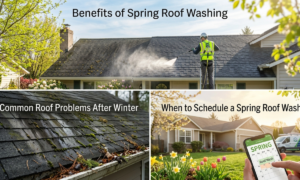
Spring can be a useful season for roof washing because it gives homeowners an opportunity to assess the roof after the colder or wetter months.
Winter weather can leave behind branches, leaves, dirt, moss, algae, and other debris. Spring maintenance can help homeowners identify these issues before they become more difficult to manage.
Benefits of Spring Roof Washing
Spring roof washing can remove accumulated organic debris and address visible algae or moss growth. It can also form part of a larger seasonal maintenance routine.
A spring roof check can be combined with inspecting gutters, looking for damaged roofing materials, checking areas around chimneys and vents, and examining nearby trees.
Common Roof Problems After Winter
After winter, homeowners may discover accumulated leaves, branches, dirt, moss, or algae. Severe weather may also leave behind damaged or missing shingles.
Not every roof problem is a cleaning problem. Leaks, damaged shingles, sagging areas, or other structural concerns require appropriate inspection and repair.
When to Schedule a Spring Roof Wash
There is no universal spring date for roof washing. Instead, choose a period when local weather conditions are suitable and the roof actually needs cleaning.
If algae, moss, or substantial debris is visible, spring may be a convenient time to address it. If the roof is already clean and in good condition, a full wash may not be necessary.
Is Summer a Good Time for Roof Washing?
Summer can be suitable for roof washing in many climates, particularly when there is a stable period without heavy rain or severe weather.
However, summer heat should not be ignored. A roof exposed to strong sunlight can become extremely hot, making roof work more difficult and potentially increasing safety concerns.
Benefits of Summer Roof Cleaning
One potential benefit of summer roof cleaning is the availability of relatively dry weather in some regions. A suitable dry period can make it easier to schedule exterior maintenance.
Summer can also be a useful time to address algae or moss that became noticeable during wetter parts of the year.
How Heat and Sunlight Can Affect Roof Washing
Extreme heat can affect both working conditions and the behavior of cleaning solutions. A solution may dry more quickly on a hot roof, which can interfere with proper application if the product instructions require a specific treatment period.
Roofing materials also have different requirements. Asphalt shingles, metal roofing, tile, and other systems should not automatically be cleaned using the same products or techniques.
The Best Summer Conditions for Roof Cleaning
A good summer cleaning window is one in which temperatures, wind, rainfall, and roof conditions allow the work to be performed safely.
Avoid scheduling roof washing during severe storms, strong winds, or extreme heat. If possible, use a professional who can evaluate the roof and determine whether the conditions are appropriate for the planned cleaning method.
Should You Wash Your Roof in Fall?
Fall can be a practical time for roof washing, especially in areas where trees drop substantial amounts of leaves and other organic material.
Cleaning and inspecting the roof before winter can help homeowners identify maintenance problems and remove unnecessary debris. However, cleaning too early in the season may mean that additional leaves accumulate afterward.
Why Fall Can Be an Ideal Time
Fall provides an opportunity to prepare the roof for the wetter or colder months ahead. It is also a useful period for checking whether algae, moss, or debris has accumulated during the warmer seasons.
A fall maintenance routine can include checking the roof, cleaning gutters, inspecting drainage areas, and trimming branches that are contributing excessive shade or debris.
Removing Leaves and Organic Debris
Leaves and organic debris can collect in roof valleys, around roof penetrations, and near gutters. When this material stays wet, it can contribute to persistent moisture.
Moss also tends to thrive in damp, shaded conditions. Overhanging branches can make these conditions worse by blocking sunlight and depositing additional debris.
Preparing Your Roof for Winter
Before winter, inspect the roof for visible damage, accumulated debris, clogged gutters, and areas of moss or algae growth. If shingles are missing or damaged, cleaning should not be treated as the first priority. Repair and professional assessment may be needed before washing.
Can You Wash a Roof in Winter?
Winter roof washing is possible in some circumstances, but it can be more difficult and hazardous than cleaning during milder weather. Snow, ice, freezing temperatures, and wet surfaces can increase the risk of slips and falls. Cleaning products may also have temperature-related application requirements.
Challenges of Winter Roof Washing
One of the biggest challenges is safe access. A roof that is wet, icy, or covered with snow can be extremely dangerous to walk on. Cold weather can also make water and cleaning solutions behave differently from how they would under moderate conditions.
Homeowners should never assume that a cleaning method suitable for warm weather will automatically be appropriate during winter.
Cold Temperatures and Moisture
Freezing temperatures introduce another concern: water can freeze on surfaces and create additional hazards.
Moisture is also relevant to algae and moss growth. Areas that remain damp and receive limited sunlight can be more vulnerable to biological growth.
If winter cleaning is necessary, the safest approach is to have the roof and weather conditions evaluated by someone familiar with the specific roofing material and cleaning requirements.
When Winter Roof Cleaning May Be Necessary
There may be situations where a roof requires attention during winter, particularly when there is significant buildup or an urgent maintenance concern.
However, a homeowner should not climb onto an icy or otherwise hazardous roof simply to remove cosmetic staining.
What Weather Conditions Should You Avoid for Roof Washing?
Choosing the right weather window is one of the most important parts of planning roof washing. Even a roof that clearly needs cleaning may be better left alone temporarily if conditions create unnecessary safety risks.
Heavy Rain and Storms
Heavy rain can make a roof slippery and can interfere with cleaning procedures. Storms can also bring strong winds and lightning, creating additional hazards.
If severe weather is expected, postponing nonessential roof washing is sensible. After a major storm, inspect the roof for damage before deciding whether it needs cleaning.
Freezing Temperatures
Freezing conditions can create slippery surfaces and make roof access hazardous. Water used during cleaning can potentially freeze when temperatures are low enough, increasing the risk of falls and other problems.
Because cleaning products have different temperature requirements, there is no single temperature that applies to every roof-washing situation. Follow the product instructions and roofing manufacturer’s guidance.
Extreme Heat and Strong Winds
Extreme heat can make roof work physically demanding, particularly on roofs exposed directly to the sun. Strong winds create another concern because they can affect ladders, equipment, workers, and cleaning solutions.
Moderate, stable conditions are generally easier to work with. If weather conditions are unsafe, postponing the job is preferable to rushing through it.
How Often Should You Wash Your Roof?
There is no universal roof washing schedule that applies to every home. The appropriate frequency depends on factors such as climate, roof material, shade, nearby vegetation, moisture, debris, and the presence of algae or moss.
Instead of automatically washing the roof every year, homeowners should inspect it regularly and clean it when there is a genuine maintenance need.
Signs Your Roof Needs Cleaning
Visible dark streaks, algae, moss, lichen, and accumulated organic debris can indicate that a roof needs attention.
However, discoloration does not always mean the roof has the same type of growth. Algae, moss, dirt, and other staining can have different appearances and require different approaches. Moss deserves particular attention on asphalt shingles because established moss can lift or curl shingle edges and interfere with water shedding.
Factors That Affect Roof Washing Frequency
Several conditions can influence how often a roof needs cleaning:
- Local rainfall and humidity
- Amount of shade
- Nearby trees and vegetation
- Roof orientation
- Amount of organic debris
- Roofing material
- Presence of algae or moss
- Drainage and gutter conditions
A shaded roof in a humid environment may develop biological growth more readily than a roof exposed to more sunlight and lower moisture levels.
How Seasonal Maintenance Can Help
Seasonal maintenance is less about washing the roof at a fixed interval and more about monitoring its condition. Inspect the roof periodically, check gutters and drainage areas, remove debris safely, keep problematic branches trimmed, and look for visible signs of damage.
Does Your Roof Type Affect the Best Time for Washing?
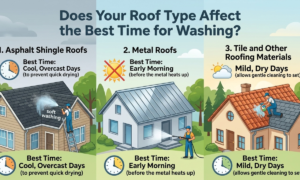
Yes. Roof material is an important consideration when planning roof washing. Asphalt shingles, metal roofs, tile roofs, and other roofing systems have different surfaces, finishes, installation methods, and manufacturer recommendations.
Asphalt Shingle Roofs
Asphalt shingles require careful cleaning. Industry guidance specifically warns against using power washers on asphalt roofing because high pressure can remove protective granules and damage the shingles.
Aggressive scrubbing should also be avoided. Appropriate cleaning solutions and gentle, low-pressure rinsing are preferred when cleaning is necessary.
Metal Roofs
Metal roofs can have painted, coated, or otherwise finished surfaces, so cleaning should be compatible with the specific roof system. The manufacturer’s instructions should be checked before using chemicals, brushes, pressure, or other cleaning equipment.
The goal is to remove dirt and organic growth without damaging the finish that protects the metal beneath it.
Tile and Other Roofing Materials
Tile roofs also require material-specific care. Clay and concrete tiles are durable, but walking on them incorrectly can cause breakage or create safety risks. The roof’s construction, tile condition, pitch, and manufacturer’s recommendations should all be considered before cleaning.
Should You Wash Your Roof Before or After the Rainy Season?
In areas with a defined rainy season, roof maintenance can be planned around the local weather pattern. Cleaning before prolonged wet weather may make sense when the roof has substantial debris or organic growth. After storms, inspection may be more important than cleaning because the roof could have suffered physical damage.
Roof Washing Before Heavy Rain
Before a rainy season, homeowners can inspect the roof, gutters, valleys, and drainage areas. If debris, algae, or moss is present, appropriate cleaning may be useful. Keeping gutters clear also helps water drain properly away from the roof.
The timing should still depend on the actual weather. Roof washing immediately before heavy rain may not be practical if the cleaning process requires a stable weather window.
Roof Cleaning After Stormy Weather
After a major storm, inspect the roof for visible damage before scheduling cleaning. Look for missing or damaged shingles, broken tiles, fallen branches, damaged flashing, leaks, and other obvious problems.
If damage is present, repair and inspection should take priority. Washing a damaged roof without addressing the underlying problem can make maintenance more complicated.
Preparing for Seasonal Changes
A seasonal roof-care routine can include inspection, debris removal, gutter maintenance, tree management, and professional cleaning when necessary.
This approach is more useful than following a rigid calendar because every roof is exposed to different environmental conditions. The purpose of seasonal maintenance is to keep small problems from being overlooked until they become expensive repairs.
Read more : Betterthisworld Business Ideas 2026: Profitable Ways to Start & Grow
Is Professional Roof Washing Better Than DIY Cleaning?
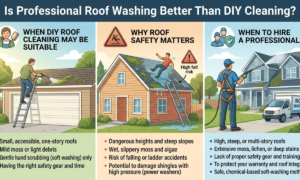
For many homeowners, professional roof washing is the safer option, particularly when the roof is steep, difficult to access, heavily soiled, or covered with moss.
Roof cleaning is not the same as cleaning a driveway or patio. Roofing materials can be damaged by excessive pressure, unsuitable chemicals, aggressive brushing, or careless foot traffic.
When DIY Roof Cleaning May Be Suitable
Homeowners can safely handle some ground-level maintenance, such as visually checking the roof from the ground and keeping accessible gutters clear when appropriate.
Actual roof cleaning is different. Climbing onto a sloped roof introduces fall risks, and wet cleaning solutions can make the surface even more slippery.
Why Roof Safety Matters
Roof washing can create several hazards at once. A sloped roof may already be difficult to walk on, and water or cleaning solutions can make it significantly more slippery.
Asphalt roofing guidance specifically warns that cleaning treatments can create hazardous walking conditions and recommends trained professionals for roof-cleaning work.
When to Hire a Professional Roof Cleaning Service
Professional roof washing is especially appropriate when:
- The roof is steep or difficult to access.
- Moss or algae covers a large area.
- The roof has visible damage.
- You are unsure which cleaning method is safe.
- The roofing material has specific maintenance requirements.
- The roof becomes slippery during cleaning.
- You need an inspection as well as cleaning.
A qualified professional can assess the roof before cleaning and select a method that is appropriate for the roofing material and current condition.
Final Thoughts: Choosing the Best Time of Year for Roof Washing
The best time of year for roof washing is not determined by a single month. Instead, it depends on the roof’s condition, local climate, roofing material, and the availability of safe weather conditions.
Spring and fall can both be useful maintenance seasons, while summer may provide suitable dry periods in some locations. Winter cleaning can be more challenging because of cold, ice, and slippery surfaces.
The most important rule is to avoid treating every roof the same. Asphalt shingles, metal roofing, tile, and specialty roofing materials can require different cleaning methods. Using excessive pressure or unsuitable products can cause damage.
FAQs About the Best Time for Roof Washing
What month is best for washing a roof?
There is no single best month for every roof; mild, dry weather is generally more suitable. Local climate, roof condition, material, and the presence of moss or algae should also be considered.
Is spring or fall better for roof washing?
Both seasons can work well, depending on local weather and the roof’s condition.
Spring allows post-winter maintenance, while fall can help prepare the roof for wetter or colder weather.
Can you wash a roof during summer?
Yes, roof washing can be done in summer when weather conditions are safe and suitable. Avoid extreme heat, strong winds, or storms, and always follow the roofing material’s cleaning recommendations.
Is it safe to wash a roof in winter?
Winter roof washing can be hazardous because of snow, ice, freezing temperatures, and slippery surfaces. When conditions are unsafe, it is better to wait for a suitable weather window or hire a professional.
How often should you wash your roof?
There is no universal cleaning schedule because every roof faces different conditions.
Climate, shade, vegetation, moisture, debris, algae, and moss can all affect how often roof washing is needed.
Pingback: ZoomInfo Stock Explained: What Investors Should Know