
The internet has transformed how people earn money, build businesses, and create wealth. One of the most exciting opportunities in today’s digital economy is online real estate. Just as physical real estate involves owning properties that generate value, digital assets can also produce income, appreciate over time, and be sold for profit. Many entrepreneurs, investors, and content creators are turning to digital real estate because it often requires lower startup costs than traditional property investments.
What Is Digital Real Estate?
It refers to online properties or assets that have value and can generate revenue. These assets occupy virtual space on the internet and can be owned, developed, monetized, and sold.
Examples include:
- Websites
- Blogs
- Domain names
- E-commerce stores
- Mobile applications
- YouTube channels
- Social media pages
- Membership communities
How Real Estate Online Works
The concept is straightforward. You create or acquire an online asset and increase its value through content, traffic, branding, and monetization.
For example:
- Build a website around a specific niche.
- Publish useful content.
- Attract visitors through SEO and marketing.
- Monetize traffic through ads or affiliate partnerships.
- Grow revenue and asset value.
Why Digital Real Estate Is Growing in Popularity
The online economy continues to expand every year. Businesses and consumers increasingly rely on digital platforms for information, shopping, entertainment, and communication. Several factors have contributed to the rise of digital property.
Lower Startup Costs
Traditional real estate often requires significant capital for down payments, renovations, and maintenance. By comparison, launching a website or blog may only require a domain name and hosting plan.
Global Reach
A physical store serves local customers, but a website can attract visitors from around the world. This global accessibility creates larger growth opportunities.
Scalability
Online assets can grow rapidly without the physical limitations associated with property ownership. A website serving 1,000 visitors today may serve 100,000 visitors in the future without requiring additional office space.
Multiple Revenue Sources
Digital assets can generate income through:
- Display advertising
- Affiliate marketing
- Sponsored content
- Product sales
- Subscription services
- Lead generation
Types of Digital Real Estate Assets
Not all online properties are the same. Some focus on content, while others generate revenue through products or services. Blogs remain one of the most popular forms of digital property.
A successful blog can earn money through:
- Advertisements
- Affiliate commissions
- Sponsored partnerships
- Digital products
Domain Names
Domain investing involves purchasing valuable website addresses and selling them later for profit. Short, memorable, and keyword-rich domains often command higher prices. Some investors build entire portfolios of domains as a form of digital real estate investment.
E-Commerce Stores
Online stores can become highly valuable assets when they establish a strong customer base.
Popular business models include:
- Dropshipping
- Private-label products
- Print-on-demand services
- Direct-to-consumer brands
YouTube Channels
Video content continues to grow in popularity.
A monetized YouTube channel can generate revenue through:
- Advertising
- Sponsorships
- Memberships
- Product promotions
Benefits of Investing in Digital Real Estate
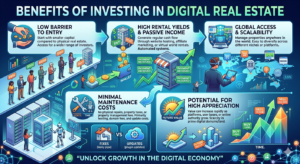
Passive Income Potential: One major attraction is the possibility of earning passive income. A blog post published today may continue generating traffic and revenue for years.
Asset Appreciation: As traffic, authority, and earnings increase, the value of online assets often grows. Many website marketplaces value sites based on monthly profit multiples.
Flexibility and Freedom: Owners can manage their assets from virtually anywhere with an internet connection.
Diversified Income: Instead of relying on a single revenue stream, digital assets can combine multiple monetization methods. This diversification helps reduce risk.
Sellable Assets: Unlike freelance work, digital properties can often be sold. Established websites, e-commerce stores, and YouTube channels frequently attract buyers looking for proven online businesses.
Risks and Challenges of Digital Real Estate
Search Engine Algorithm Updates: Search engines regularly update ranking systems. A website that depends heavily on organic traffic may experience fluctuations.
Competition: Many niches are highly competitive.Success often requires patience, quality content, and strategic marketing.
Technical Maintenance: Websites require updates, security monitoring, and occasional troubleshooting. Ignoring maintenance can negatively affect performance.
Cybersecurity Risks: Hackers and malware can threaten online assets. Strong security practices are essential.
Revenue Fluctuations: Advertising rates, affiliate commissions, and consumer behavior can change over time. Diversifying income sources helps minimize these risks.
How to Build Digital Real Estate From Scratch
Building a profitable online asset takes time, but the process is straightforward. Select a topic with:
- Strong audience demand
- Monetization opportunities
- Long-term growth potential
Popular niches include:
- Personal finance
- Health and wellness
- Technology
- Education
- Travel
- Home improvement
Conduct Keyword Research
Keyword research helps identify topics people are actively searching for.
Look for:
- High search volume
- Reasonable competition
- Commercial intent
Targeting the right keywords helps attract qualified traffic.
Register a Domain Name
Choose a domain that is:
- Easy to remember
- Relevant to your niche
- Brandable
- Short and simple
A strong domain contributes to long-term brand recognition.
Create High-Quality Content
Content is the foundation of successful digital real estate.
Focus on creating:
- Informative post
- Detailed guides
- Helpful tutorials
- Original insights
Quality content attracts visitors and builds trust.
Optimize for SEO
Search engine optimization increases visibility in search results.
Key SEO practices include:
- Keyword optimization
- Internal linking
- Mobile responsiveness
- Fast page speed
- User-friendly navigation
Build Authority
Authority is essential for sustainable growth.
Ways to build authority include:
- Publishing expert content
- Earning backlinks
- Growing social proof
- Maintaining content accuracy
The stronger your reputation, the easier it becomes to attract traffic and revenue.
How to Monetize Digital Real Estate
Once you have built traffic and authority, the next step is generating income from your online assets. One reason many people invest in is the variety of monetization opportunities available.
Display Advertising
Display ads are one of the easiest ways to earn revenue from websites and blogs. Advertising networks place ads on your website, and you earn money when visitors view or click on them.
Popular options include:
- Google AdSense
- Premium ad networks
- Direct advertising partnerships
Affiliate Marketing
Affiliate marketing allows website owners to recommend products or services and earn commissions from successful referrals.
This model works particularly well for:
- Product review websites
- Comparison websites
- Educational blogs
- Niche authority sites
Selling Digital Products
Digital products often provide higher profit margins than physical products.
Examples include:
- E-books
- Templates
- Online courses
- Software tools
- Printable resources
Membership and Subscription Models
Recurring revenue can be generated through premium memberships or subscription-based content.
Examples include:
- Exclusive communities
- Educational portals
- Premium newsletters
- Professional resource libraries
Digital Real Estate vs Traditional Real Estate
Many investors compare online assets with physical property investments. Both can create wealth, but they differ significantly.
| Factor | Virtual real estate | Traditional Real Estate |
| Startup Cost | Low to Moderate | High |
| Geographic Limitations | Global Reach | Location-Based |
| Scalability | Highly Scalable | Limited by Physical Property |
| Maintenance | Technical Updates | Repairs and Maintenance |
| Income Sources | Ads, Affiliates, Products | Rent and Appreciation |
| Liquidity | Often Easier to Sell | Can Take Months to Sell |
| Management | Remote-Friendly | Often Requires Physical Oversight |
| Growth Potential | Rapid Expansion Possible | Generally Slower Growth |
Best Strategies for Growing Digital Real Estate
Creating an asset is only the beginning. Growth requires strategic planning and continuous improvement. SEO remains one of the most powerful methods for increasing organic traffic.
Important SEO practices include:
- Keyword optimization
- Internal linking
- Technical SEO
- User experience improvements
- Content updates
Create Evergreen Content
Evergreen content remains relevant over time and continues attracting visitors long after publication.
Examples include:
- Tutorials
- How-to guides
- Industry resources
- Educational content
Build an Email List
An email list gives you direct access to your audience without relying entirely on search engines or social media platforms.
Benefits include:
- Higher engagement
- Repeat traffic
- Product promotion opportunities
- Stronger customer relationships
Diversify Revenue Sources
Depending on one revenue stream can be risky.
A balanced approach might include:
- Advertising
- Affiliate income
- Product sales
- Sponsored partnerships
Common Mistakes to Avoid
Many beginners make avoidable errors when building online assets.
- Choosing the Wrong Niche: Selecting a niche without audience demand can limit growth potential.
- Ignoring SEO: Without SEO, even excellent content may struggle to attract visitors.
- Publishing Low-Quality Content: Thin or poorly researched content rarely performs well in search engines.
- Relying on One Traffic Source: Traffic diversification helps protect your asset from sudden changes in algorithms or platform policies.
- Giving Up Too Early: Many successful online assets take months or even years to reach their full potential.
Future Trends in Digital Real Estate

The future of online asset ownership continues to look promising.
- AI and Automat: Artificial intelligence is helping website owners improve content creation, customer support, and business operations.
- Creator-Owned Platforms: More creators are building independent websites and communities instead of relying solely on third-party platforms.
- Digital Asset Marketplaces: The buying and selling of websites, domains, and online businesses continues to grow, making online assets more liquid than ever.
- Increasing Online Commerce: As more consumers shop, learn, and interact online, demand for quality digital properties is likely to increase.
Conclusion
Digital opportunities continue to expand, creating new ways for individuals and businesses to build wealth online. Unlike many traditional investments, digital assets can often be created with relatively low startup costs while offering significant growth potential.
Whether you choose to build a blog, launch an e-commerce store, invest in domain names, or grow a YouTube channel, digital real estate provides numerous pathways to generate income. The key is selecting the right niche, creating value for your audience, and consistently improving your asset over time.
FAQs
What is it in simple terms?
It refers to online assets such as websites, blogs, domain names, YouTube channels, and online stores that can generate income and increase in value over time.
Is digital real estate a good investment?
Yes, it can be a profitable investment when managed properly. It offers income potential, scalability, and lower startup costs compared to many traditional investments.
How much money do I need to start?
Many beginners can start with a small budget for a domain name, hosting, and basic website tools. Costs vary depending on the type of asset being created.
Are novices able to construct virtual real estate?
Absolutely. With consistent effort and learning, beginners can create websites, blogs, social media assets, and other digital properties that generate income.
How long does it take to earn money?
The timeline varies. Some assets may generate revenue within a few months, while others may take a year or longer to become profitable.