
Building a startup requires more than a promising idea. Founders also need enough capital to develop products, hire people, reach customers, and continue operating while the business grows. That makes fundraising an important part of startup planning.
A Startup Booted Fundraising Strategy should be approached as a structured plan for determining how much money a startup needs, choosing suitable funding sources, preparing for investors, and deciding how the capital will be used. The terminology may vary from one startup to another, but the underlying principles of fundraising remain similar.
A successful strategy begins with preparation. Founders need to understand their financial position, define their goals, prepare their business information, identify appropriate investors, and communicate a realistic plan for using the money.
Understanding the Startup Booted Fundraising Strategy
What Is a Startup Booted Fundraising Strategy?
The phrase Startup Booted Fundraising Strategy is best used to describe a planned approach to raising money for a startup. It is not a standardized financial term or a specific type of investment.
In practical terms, a startup fundraising strategy answers several important questions: How much capital does the company need? Why does it need the money? Which funding options are available? Which investors might be suitable? What milestones should the company achieve with the capital?
Instead of approaching fundraising as simply asking people for money, founders can treat it as a business-planning process. The funding target should have a clear connection to the company’s expected expenses, operating runway, and business objectives.
Why Fundraising Strategy Matters for Startups
A fundraising strategy helps founders make financial decisions before entering investor discussions. Different funding methods can have different consequences for ownership, repayment, control, and future financing.
Set Clear Fundraising Goals Before You Start
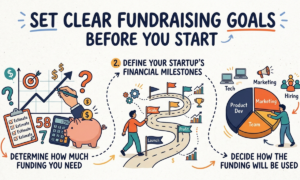
Determine How Much Funding You Need
The first step is to calculate a realistic funding requirement. Start with the company’s expected expenses rather than choosing an arbitrary fundraising number.
Consider costs such as salaries, product development, technology, marketing, office or operating expenses, professional services, and other costs relevant to the business.
Define Your Startup’s Financial Milestones
Funding becomes easier to plan when Startup Booted Fundraising Strategy is connected to measurable milestones. A milestone could involve launching a product, reaching a particular customer level, expanding a sales operation, developing new technology, hiring key employees, or reaching a specific revenue objective.
The milestones should reflect the actual business model. A software startup may focus on product development and customer acquisition, while a physical-product company may have different capital requirements related to manufacturing and inventory.
Decide How the Funding Will Be Used
Founders should be able to explain where the money will go. Rather than describing the purpose simply as “business growth,” create clear categories such as product development, hiring, marketing, infrastructure, research, or working capital.
This gives investors a better understanding of how the proposed funding relates to the company’s objectives. Startup Booted Fundraising Strategy also gives founders a framework for monitoring whether the money is being used according to the original plan.
Choose the Right Fundraising Method
Bootstrapping and Self-Funding
Bootstrapping involves using the founder’s own resources to finance the business. This can allow a founder to maintain greater control because outside investors are not necessarily involved.
However, self-funding also means the founder takes on the financial risk associated with the money contributed to the business.
Angel Investors
Angel investors are individuals who invest their own capital in businesses, including startups.
Money is not necessarily the only consideration. Some angel investors may also bring industry knowledge, professional connections, operational experience, or advice.
Venture Capital
Venture capital is a form of equity financing in which investment funds provide capital to companies in exchange for an ownership interest or another agreed investment instrument.
Venture capital is commonly associated with startups that have significant growth ambitions, but not every startup is suitable for venture funding.
Crowdfunding and Alternative Funding
Crowdfunding can provide another route for raising money, depending on the business and the type of crowdfunding being considered.
Different crowdfunding models have different structures. Some involve customers supporting a product or project, while securities-based crowdfunding involves investment and is subject to applicable securities regulations.
Prepare Your Startup for Investors
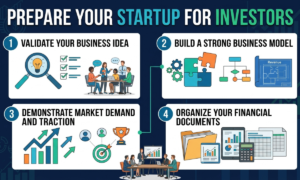
Validate Your Business Idea
Before approaching investors, founders should be able to demonstrate why the business deserves attention. Validation can come from different forms of evidence, including customer feedback, product usage, sales, partnerships, contracts, or other measurable indicators of market interest.
The evidence will differ depending on the company’s stage. A very early startup may have limited commercial data, while a more established company may have revenue and customer metrics.
Build a Strong Business Model
Investors need to understand how the startup creates value and how Startup Booted Fundraising Strategy expects to generate revenue. Explain who the customers are, what problem the business addresses, what customers pay for, how the company reaches them, and what major costs affect the business.
Demonstrate Market Demand and Traction
Market demand provides context for the fundraising story. Depending on the startup, useful evidence may include revenue, customer numbers, user activity, retention, partnerships, contracts, repeat purchases, or other meaningful business indicators.
Do not confuse projections with actual traction. A forecast describes what the company expects to achieve; traction describes evidence of what Startup Booted Fundraising Strategy has already achieved.
Organize Your Financial Documents
Financial preparation is an important part of investor readiness. A startup should maintain accurate financial information and an up-to-date capitalization table showing ownership interests. Financial statements can help communicate the company’s current financial position.
Important documents should be organized before investor discussions become advanced. Depending on the company and transaction, investors may need to review corporate records, financial information, ownership details, contracts, intellectual property information, and other business documents during due diligence.
Create a Powerful Investor Pitch
Explain the Problem and Your Solution
Start by explaining the problem your customers face.
Then show how your product or service addresses that problem. Avoid filling the opening with unnecessary technical details. Investors should be able to understand the basic business idea quickly.
A strong pitch does not need to explain every feature. Startup Booted Fundraising Strategy needs to communicate the central business idea clearly enough that the audience understands why the company exists and what it is trying to accomplish.
Highlight Your Target Market
Explain who the startup serves. Instead of relying only on a large industry statistic, identify the specific customer group the company intends to reach. Explain why those customers have the problem and how the startup plans to reach them.
Present Your Business Model
The business model explains how the company intends to make money. Depending on the startup, this could involve subscriptions, product sales, transaction fees, licensing, services, advertising, or another revenue structure.
Explain the model simply and show the major factors that affect revenue and costs. Investors should be able to understand where the company’s future revenue is expected to come from.
Showcase Your Competitive Advantage
Explain what makes your company different from existing alternatives. A competitive advantage could come from technology, intellectual property, distribution, customer relationships, specialized knowledge, brand positioning, operational capabilities, or another genuine factor.
Avoid claiming that your startup has “no competition.” Customers may already be solving the problem using another product, service, internal process, or manual approach.
Build an Investor-Ready Pitch Deck
Essential Pitch Deck Slides
There is no single mandatory pitch-deck structure for every startup, but a useful deck should communicate the core information an investor needs to understand the opportunity.
Common topics include:
- Company overview
- Customer problem
- Product or solution
- Target market
- Business model
- Traction or progress
- Competitive landscape
- Team
- Financial information
- Funding requirement
- Planned use of funds
The deck should focus on the most important ideas rather than trying to include every detail about the company.
How to Present Financial Projections
Financial projections should be based on identifiable assumptions. Explain the main factors behind projected revenue, expenses, hiring, customer growth, and cash requirements. If a forecast depends on assumptions about pricing or customer acquisition, make those assumptions understandable. Avoid presenting extremely optimistic numbers without explaining how they were calculated.
How to Explain Your Funding Requirements
Make your funding request specific. Tell investors how much capital you are seeking and explain what the money is expected to accomplish. Connect the amount with operating expenses, milestones, and the company’s expected runway.
Find and Approach the Right Investors
Research Potential Investors
Research investors before contacting them. Look at their preferred industries, company stages, investment interests, portfolio companies, and areas of expertise. This can help you determine whether there is a genuine connection between the investor and your startup. Investor research also helps founders avoid spending time on conversations where the basic investment criteria do not match.
Match Investors With Your Startup Stage
Different investors may focus on different stages of company development. An investor who primarily supports later-stage companies may not be appropriate for a startup that is still validating its product. Similarly, a startup seeking a small early-stage investment may not fit an investment fund’s typical requirements.
Build Meaningful Investor Relationships
Fundraising can involve relationships that continue after the investment. Some early-stage investors may provide advice, introductions, industry knowledge, or other support. Others may have different levels of involvement. Consider the relationship you want to build, not just the amount of money being offered.
Personalize Your Fundraising Outreach
Avoid treating every investor as if they are identical. When reaching out, explain why you believe the investor is relevant to your company. Keep the message concise and provide enough information to understand the business, Startup Booted Fundraising Strategy current stage, and the reason for the conversation.
Develop a Realistic Startup Valuation
Understand Startup Valuation Basics
Startup valuation is an estimate of a company’s value for purposes such as an investment transaction. Valuation can be influenced by many factors, including the company’s stage, financial performance, growth, market opportunity, assets, competitive position, financing structure, and current market conditions.
Early-stage companies may also use convertible instruments such as SAFEs instead of immediately setting a traditional priced equity valuation. The terms of these instruments can affect how future ownership is calculated.
Consider Revenue, Growth, and Market Potential
There is no universal formula that determines the value of every startup. Revenue, growth, customer activity, market opportunity, competitive position, technology, team, and financial requirements can all be relevant to an investor’s analysis.
The important point is to avoid selecting a valuation simply because Startup Booted Fundraising Strategy sounds attractive. Founders should understand the assumptions and ownership consequences associated with the proposed financing.
Prepare for Valuation Discussions
Valuation discussions can affect founder ownership and future financing. For example, selling equity means existing owners may experience dilution. Convertible instruments can also affect ownership when they convert into shares.
Prepare for Investor Due Diligence
Organize Legal and Financial Records
Due diligence involves reviewing information about the company before an investment is completed. Investors may examine financial statements, ownership records, corporate documents, contracts, intellectual property, business operations, and other relevant information.
Keeping these records organized can make the process more efficient and help identify problems before they become obstacles during fundraising.
Be Ready for Investor Questions
Investors may ask about revenue, expenses, customers, competition, market size, product development, hiring, ownership, risks, and future plans. Founders should know their important numbers and understand the assumptions behind their forecasts.
Communicate Risks and Challenges Transparently
No startup has a completely risk-free business model. Founders should be prepared to discuss challenges such as competition, customer acquisition, regulatory issues, technical development, hiring, cash requirements, or dependence on particular suppliers or customers when those risks are relevant.
Transparency helps keep investor discussions grounded in the actual condition of the company.
Common Fundraising Mistakes Startups Should Avoid
Raising More or Less Than You Need
A fundraising target should have a clear business reason. Raising too little may leave the company without enough capital to reach Startup Booted Fundraising Strategy planned milestones. Raising more than necessary may introduce additional ownership, financing, or management considerations.
Targeting the Wrong Investors
Having access to capital does not automatically make someone a suitable investor. Differences in industry focus, company stage, investment size, expectations, or desired involvement can make an investor a poor fit.
Relying on Unrealistic Financial Projections
Aggressive forecasts are not automatically persuasive. Investors may question projections that lack clear assumptions or appear disconnected from the company’s existing performance. Build forecasts using understandable drivers and explain what needs to happen for the projections to become achievable.
Neglecting Investor Relationships
Fundraising requires time and attention. Founders should not assume that communication ends when the investment is completed. Depending on the financing arrangement, investors may remain involved in company decisions, reporting, advice, or governance.
Read more : Betterthisworld Stocks – Easy Guides & Expert Insights!
How to Manage Funds After Successful Fundraising
Allocate Capital to Key Priorities
Receiving funding is the beginning of the next stage of execution. Use the capital according to the priorities established during planning while remaining prepared to adjust when business conditions change.
The objective should be to turn available capital into measurable business progress rather than simply increasing spending.
Track Spending and Business Milestones
Monitor how much money is being spent and compare actual results with the original plan. Track relevant measures such as cash balance, operating expenses, revenue, customer growth, product milestones, or hiring progress. Regular monitoring can help founders identify problems early and make better financial decisions.
Maintain Communication With Investors
Keep investors informed according to the expectations and requirements of the financing relationship. Share meaningful developments, explain major changes, and provide accurate information about progress.
Good communication becomes particularly important when the company encounters challenges or when the original business plan needs to change.
Final Thoughts
A successful Startup Booted Fundraising Strategy is ultimately about preparation, clarity, and responsible financial planning. Start by determining how much capital the business actually needs. Connect that amount with operating runway and measurable milestones. Then choose funding methods that fit the company’s circumstances, prepare accurate financial and ownership information, develop a clear investor pitch, and research investors carefully.
Fundraising should not be treated as simply collecting as much money as possible. Capital comes with financial, ownership, legal, and strategic considerations. Founders should understand those implications before accepting an investment. Most importantly, keep the fundraising story connected to the actual business. Explain what the company does, who it serves, what progress Startup Booted Fundraising Strategy has made, what challenges remain, how much funding it needs, and what the capital is expected to accomplish.
FAQs About Startup Fundraising
What Is the Best Fundraising Strategy for a Startup?
There is no single strategy that suits every startup; the right approach depends on Startup Booted Fundraising Strategy stage, goals, funding needs, and business model. Options may include bootstrapping, angel investment, venture capital, crowdfunding, or other suitable financing.
How Much Money Should a Startup Raise?
A startup should base Startup Booted Fundraising Strategy fundraising target on projected expenses, operating runway, and specific business milestones. The amount should provide enough capital to achieve planned objectives without becoming an arbitrary figure.
When Should a Startup Start Fundraising?
Founders should begin preparing before the business urgently needs additional capital, allowing enough time for investor discussions and due diligence.
What Should Be Included in a Startup Pitch Deck?
A pitch deck should clearly cover the problem, solution, market, business model, progress, competition, team, financial information, and funding requirements.
How Can Startups Attract the Right Investors?
Startups should research investors whose interests, investment stage, industry focus, and funding expectations align with the business. Personalized outreach and a clear explanation of the company’s opportunity can make investor conversations more relevant.